July Payroll Preview
We see ample evidence technology innovation adoption is leaving a disinflationary mark on the labor market.

Our July payroll preview note has 14 charts and tables and covers the impact of accelerated technology innovation adoption (AI), lower immigration, and the low churn, slow burn wage disinflation.
Regime Change at the FOMC
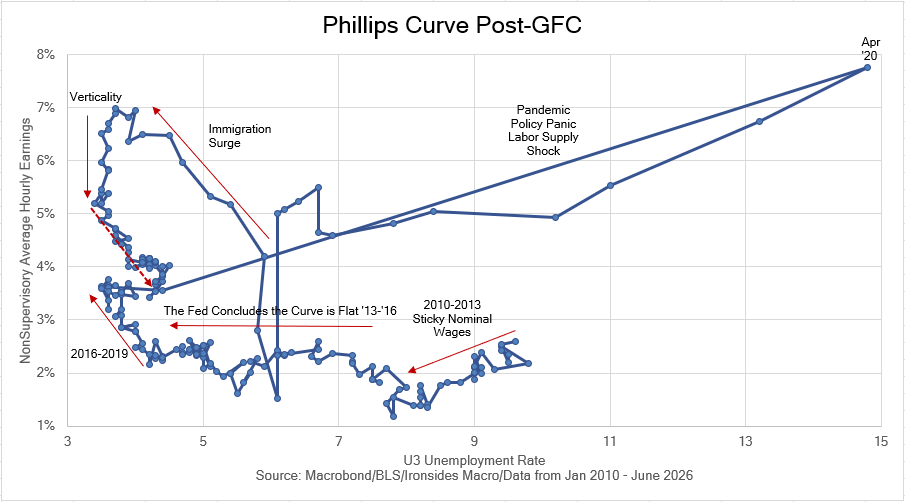
In our last weekly note Be the Ball, we concluded that the Warsh Fed is likely to deemphasize the expectations enhanced Phillips Curve inflation model. If we are correct, investors should reduce their focus on the headline employment survey measure of demand, and spend more time on the supply of labor, the price for labor and whether wage growth is being driven by productivity or other frictions like fiscal transfers. A key element of our analysis of sustainable real wage growth is churn or dynamism. In short, worker reallocation, the quarterly sum of hiring and separations, drives labor productivity. On that front, churn is no longer deteriorating, but we would categorize the labor market as low churn, slow burn. The June report had two particularly notable aspects; a divergence between the softer than expected establishment and the decidedly weak household survey, and the sharp decline in labor force participation. There are two other important questions we will discuss, first whether technology innovation adoption and AI specifically are impacting the labor market, and second the reversal of the Biden immigration boom effect on the labor market.